

You know the drill... fall in New England means warm days and cold nights. So what does that mean for your hiking plans? Simply put, it means a little more preparation before you head outside.
And for me? It is my favorite time to hit the trail.
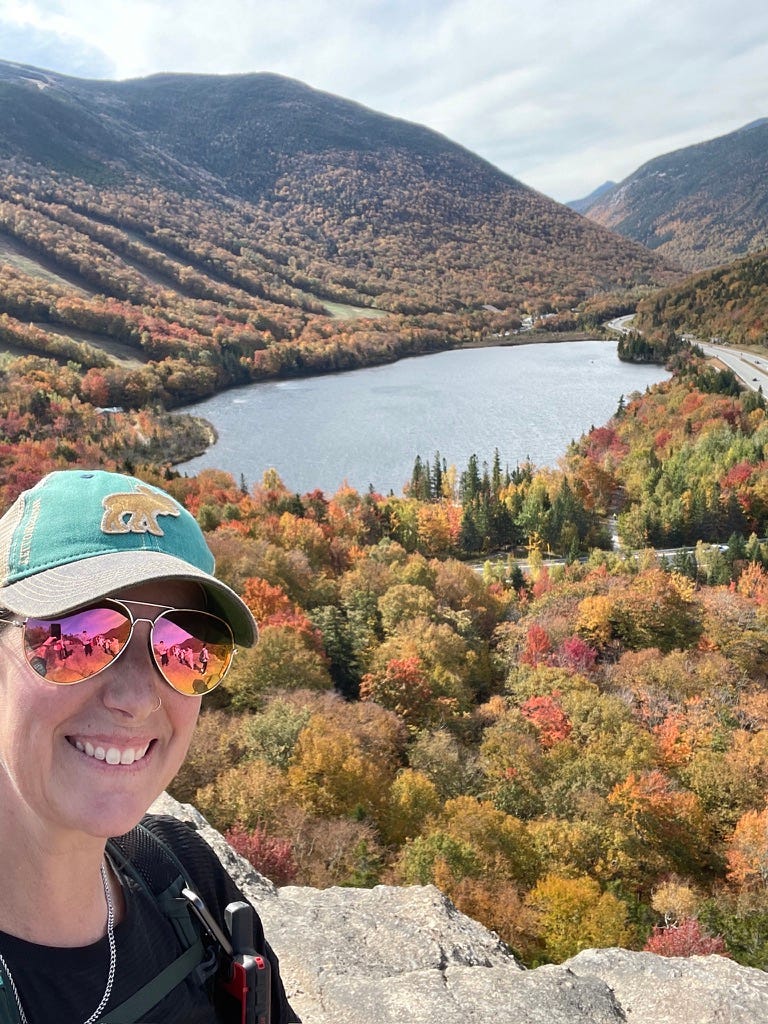
Early on, when I was new to hiking, I would head out in jeans and a sweatshirt (IYKYK) and call it a day. I’d end up with a sweaty back, cold fingers and miserable feet.
It took me a long time, and someone to physically show me, to figure out the layers that would keep my body a good temp both up and down the trail. And another learning curve for the gear that would help in this transitional season for comfort and safety.
The trailhead might be 70 degrees with no wind and a summit could be socked in or a windy 45 degrees. There could be a drought situation all summer that leads to fall rains and muddy trails. You can even have early snow in higher elevations! These variations require a little extra planning for what belongs in your hiking pack.
My fall clothing system is actually pretty simple. I start with a quick-dry shirt, add a mid weight fleece when I need it and keep a packable puffy in my bag for when the temperature really drops. On my recent Washington trip, some version of those three layers got me through almost everything.


One thing I didn’t understand until I was hiking more, is that these layers are on and off all day as your level of activity and the weather changes. I thought I would get dressed and that would be it! Growing up in the South, it was a new concept for me, as I had never even owned a winter coat before moving to New England.
For pants, I tend to just wear leggings, but there are great options for a more standard hiking pant or fleece lined leggings. They tend to make me hot though, so you’ll have to experiment with that for yourself.
I always hike with a rain shell, since I can layer that on top of a puffy to keep more wind out, or to protect myself from rain. When backpacking, I might take rain pants too, but when I day hike, I leave those at home. I hiked an entire trail once in rain pants and jacket with my waterproof boots and was the only one who arrived at camp completely dry!
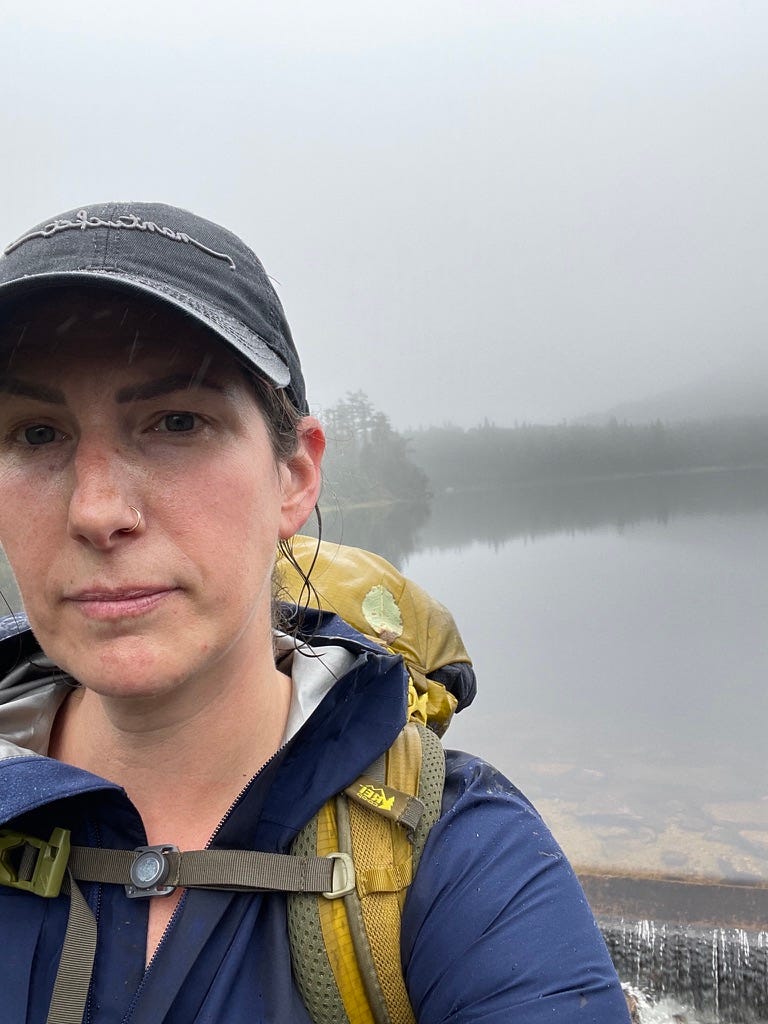
Here’s where I tend to branch off a bit from the typical advice. My hands and feet can get really cold and there is no recovery from that. I usually take gloves and liners, along with hand warmers just in case. I wear thicker wool socks in winter and my waterproof boots, since they keep my feet a bit warmer than my trail runners. I even wear these boots with my snowshoes and snow pants when winter hits.
I keep a winter hat in my bag too – I can’t stand having cold ears!
Fall is also when I’m a little more careful about what’s living in the bottom of my pack. I carry the 10 Essentials year-round, but shoulder season is when I’m especially glad they’re there.
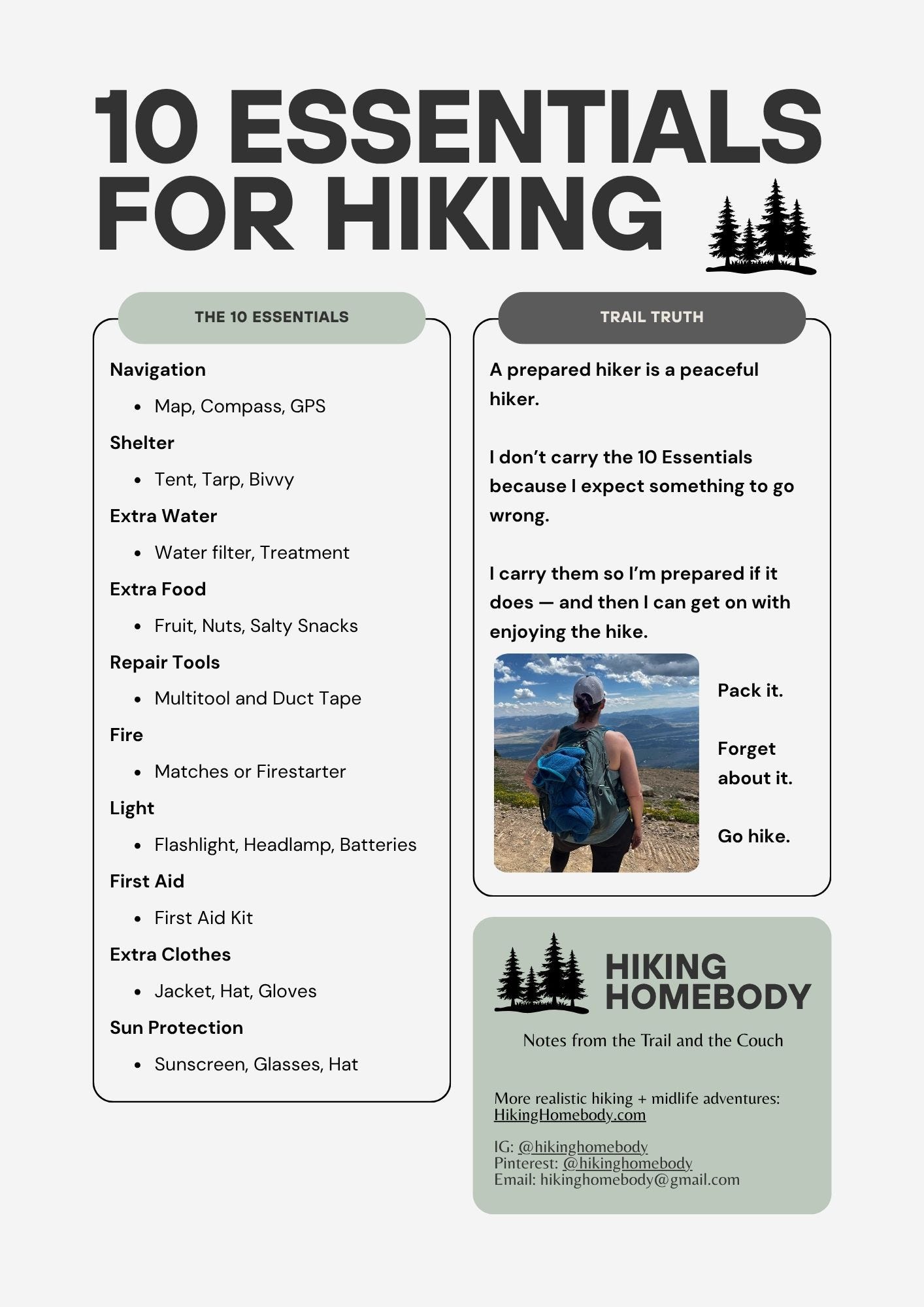
My version includes the extra layers I mentioned above, my Garmin satellite communicator, bivvy shelter, water filter, extra snacks, a small knife and duct tape, waterproof matches, headlamp, first-aid kit and sun protection.
Most of it stays packed all the time, which means I’m not reinventing my hiking bag every time I head out.
I also buy a New Hampshire Hike Safe Card each year. It’s inexpensive and supports search and rescue efforts — one of those little pieces of hiking housekeeping I just build into the year.
Having all these things in place, helps me to feel safe and prepared for anything. No need for anxiety when things are set up well.
I carry enough food for a day or so (I tend to hoard snacks anyway) and my water filter gives me the ability to drink from any source I come across, if needed.
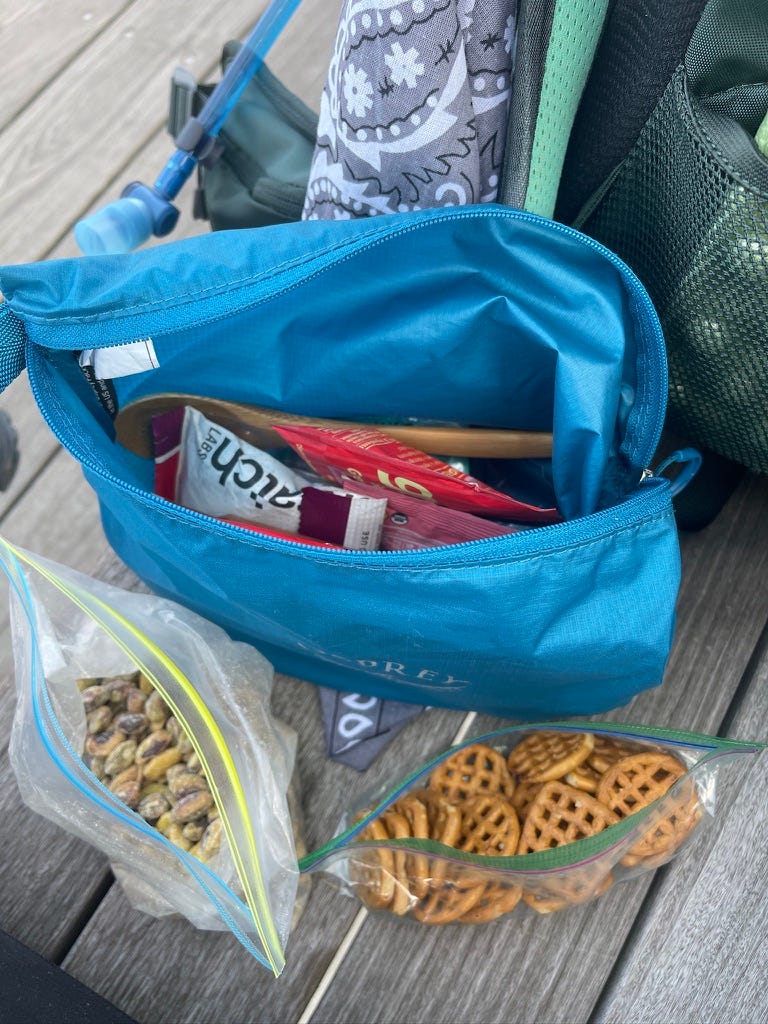
WHAT I PACK FOR A DAY HIKE
My free Day Hike Packing List + favorite trail snacks
Get the free list → HERE when you subscribe
The truth is, when you see everything laid out, it can start to look like you need an entire outdoor store just to go for a walk in the woods.
You don’t.
I certainly didn’t start with all of this. I started in jeans and a sweatshirt, remember?
I’ve picked up gear over time. I’ve bought gear gently used. I’ve figured out what I actually reach for and what stays home. And every season I understand my own hiking system a little better.
A prepared hiker is a peaceful hiker.
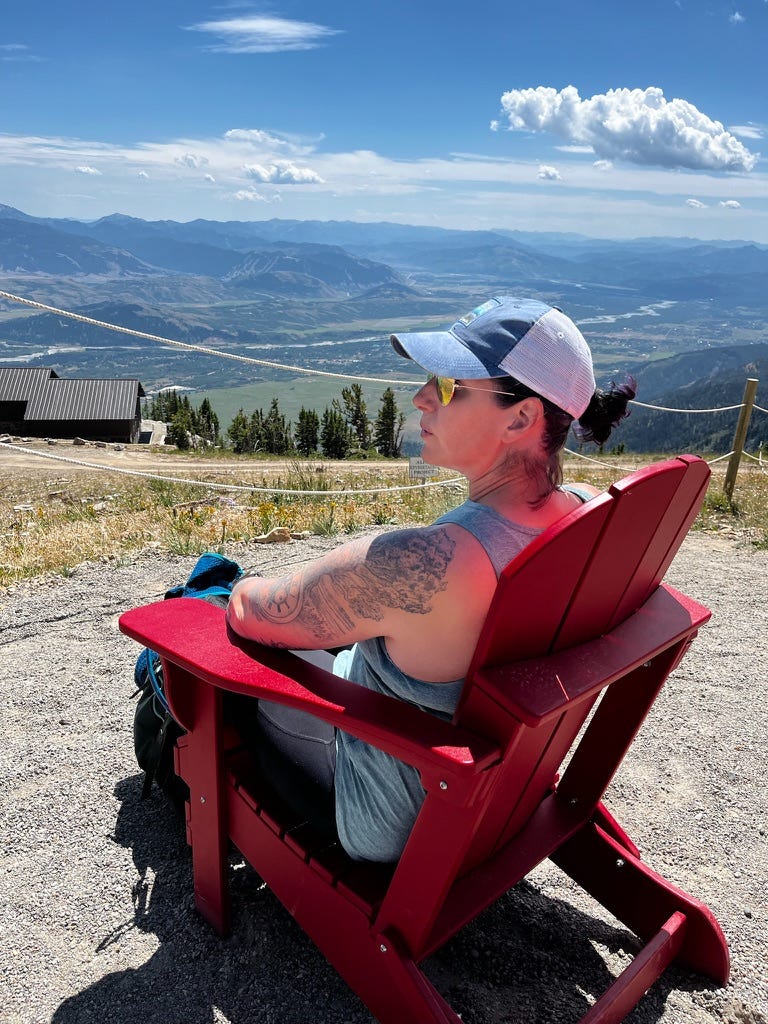
At least that’s how it feels for me. Once I know I have what I need in my pack, I can stop worrying about all the what ifs and just enjoy being outside.
So start with what you have. Add what you need. Keep a running list of what works and what doesn’t.
And just keep hitting the trail.