


I first came to New England at 21, having just met my now husband, who grew up here. I was wide-eyed and not particularly well traveled. I had no idea just how different one part of the United States could feel from another.
It sounds a little foolish to admit now, but I had never really experienced four distinct seasons. I’d never seen truly big mountains. I’d never stood in a landscape that looked completely different from anything I’d known growing up.
I was raised in a beach town in the South, where most of the year can be summed up in one word: hot. I didn’t even own a winter coat.
Maybe that’s why I spent so much of my childhood dreaming about travel. I would flip through my dad’s collection of National Geographic magazines, fascinated by places that felt impossibly far away. I wanted to see mountains, deserts, forests, and places that looked nothing like home.
Then I moved to New England.
Before long, I fell in love with crisp autumn mornings, city life, and the White Mountains of New Hampshire. Those things might seem like an odd combination, but together they became the backdrop for an entirely new chapter of my life.
I finished nursing school in Boston, lived in a small city apartment, and learned to navigate the subway—experiences that felt completely foreign to someone who had never lived outside the Southeast.
My husband had grown up camping in New Hampshire with his dad and couldn’t wait to share it with me. We made our first trip to Dolly Copp Campground, tucked into the White Mountain National Forest. It’s a simple, no-frills campground, but that’s part of its charm. Surrounded by mountains, rivers, and tall pines, it became the place where my own love of New England really began.
Before long, we had our favorite campsites. We’d drive north whenever we had a few days off to camp, hike, and explore another trail.
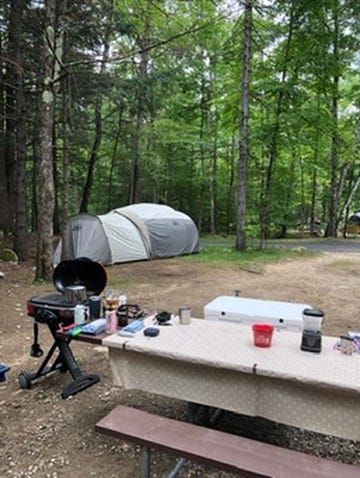
Eventually our kids came along, and we brought them with us to NH. They grew up chasing waterfalls, scrambling over rocks, roasting marshmallows around campfires, and learning to love the White Mountains the same way we had.
Looking back now, those weekends shaped far more than our vacations. They gave our family a place that still feels like home.
After more than twenty-five years of exploring New England, there are so many things I wish someone had told me before I laced up my boots for the first time. If you’re new to hiking here—or planning your first trip—this is the guide I wish I’d been handed all those years ago.
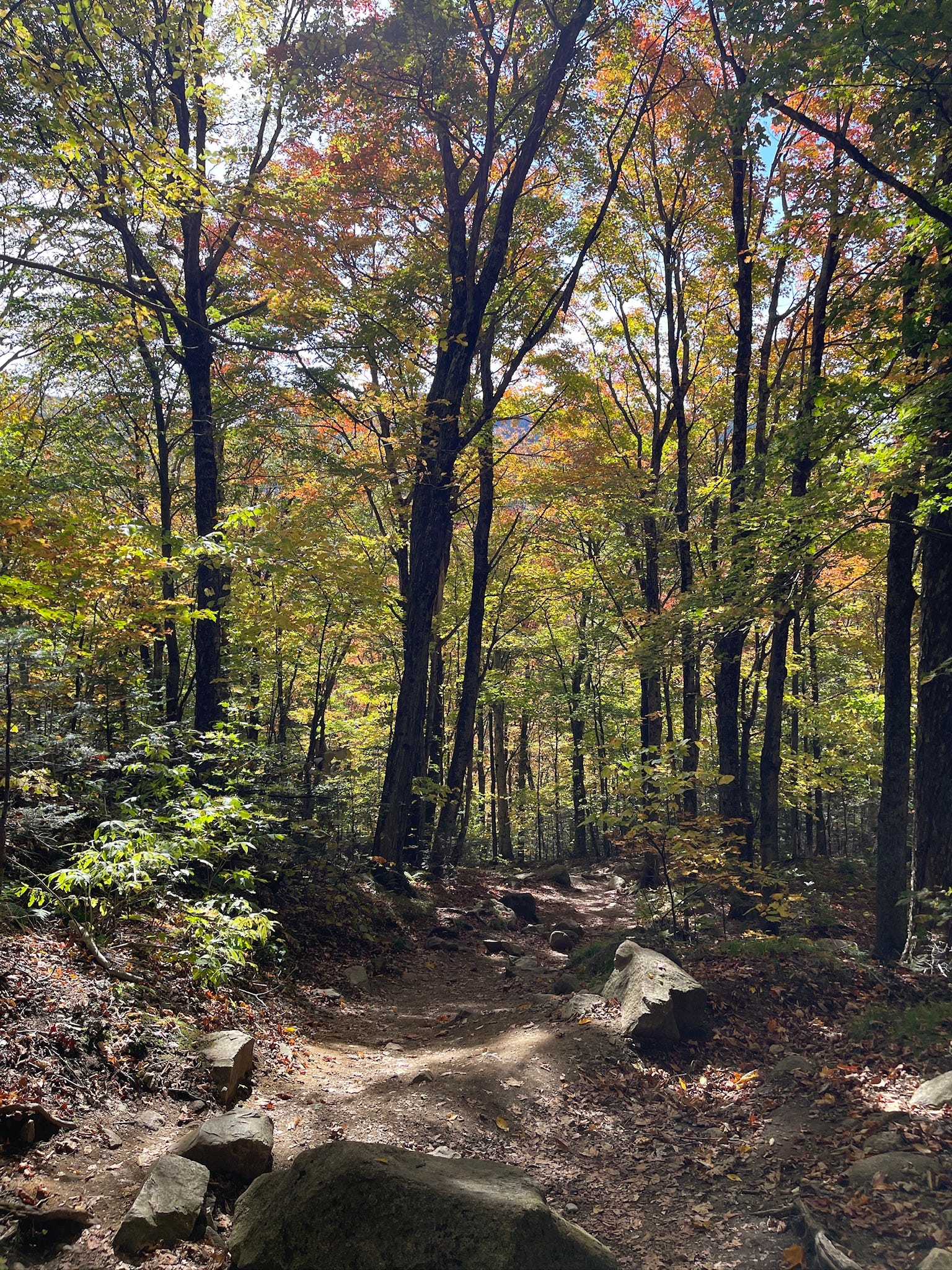
New England Trails Are Harder Than They Look
One of the most important things to know about hiking in New England is that mileage and elevation gain can feel very different here than they do in other places. A 3-mile hike here might be straight up and full of rock scrambles. This makes it feel more difficult, so a 5-mile hike here might feel like a 10-mile hike somewhere else. Distance isn’t the best way to judge a New England hike.
Don’t judge yourself by mileage alone and take the time to understand how much elevation gain per mile is in your zone of fitness. For me, under 500 ft gain/mile usually feels fairly easy. Around 750 ft gain/mile is moderate and anything around 1000 ft gain/mile is tough.
Trails are usually covered in roots and rocks, so you’re just as likely to be scrambling over a big boulder as trying not to trip on a root-covered trail.
Your numbers might be completely different from mine—and that’s the point. Once you figure out what elevation per mile feels comfortable for you, choosing trails gets much easier.
Weather Changes FAST
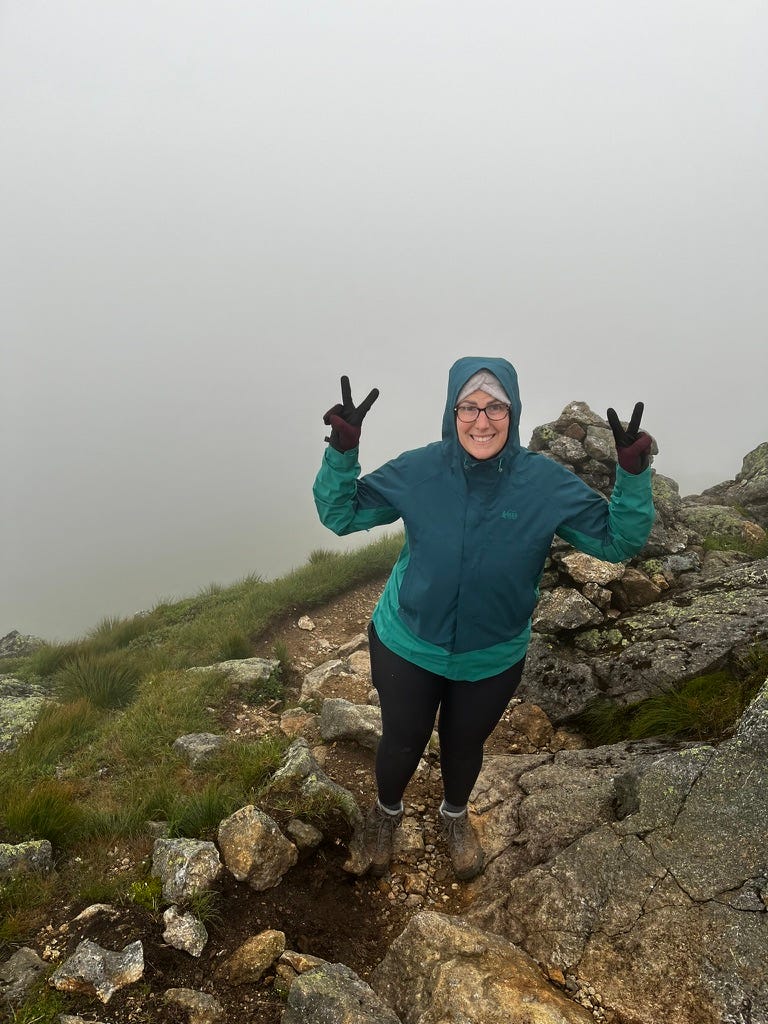
In any mountains, the weather can act differently than other places. Specifically in the Whites, weather tends to get stuck in Franconia Notch. It can be completely sunny on one side and raining on the other side of the notch. It’s actually pretty cool to see when you drive through!
I use a couple of apps to check weather before hiking in New England. My basic weather app of choice is Weather Underground, but you can use whatever you like. This is the one I check for driving to a trailhead. Second, I always check both Mountain-Forecast (they have an app) and the Mount Washington Observatory Website. These two resources give weather at elevation, which can be very different than at a trailhead. Especially when you get above treeline and there is very little to protect you from wind, sun and rain. Thunderstorms are very dangerous as well, so it’s important to know when to bail.
I also pack a rain layer or cold weather layer depending on the season. Then if things change quickly I can adapt. I had to bail on a summit once when the weather turned and we had cold temps and 90 mph gusts above treeline!
Start Smaller Than You Think
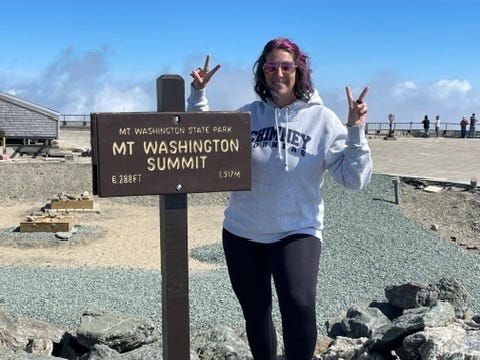
It’s best to build to bigger hikes (if you ever want to do them at all – its ok to stay small!) rather than jumping right into a NH 4,000-footer. Try local parks, state parks and conservatories near you and get the mileage built up before you jump into a bunch of elevation gain.
There are also PLENTY of smaller White Mountain trails perfect for families or someone looking to get out without trying to see the biggest peak they can. I have some of these noted in my Trail Notes series right here on Substack.
The White Mountains Aren’t to Be Taken Lightly
The White Mountains (like any mountains) are gorgeous, but don’t underestimate the danger. Rescues happen every year. Sometimes accidents simply happen, but good planning and knowing when to turn around can reduce your chances of needing one.
Respect the mountain and be prepared to turn around if you don’t feel right. Just this week I turned around and missed a summit because I encountered a bear and gave him his space. No reason to put myself at risk! I’ll just pivot and check out another trail another day.
Don’t forget – we are in Mother Nature’s arena! Animals and weather are bigger than you and should be respected as such. We don’t have to be fearful, we just need to be aware.
Download Your Maps Before You Go
I made the mistake of not doing this because I didn’t have paid access to an app in the past. With paid access, you can download offline maps on AllTrails or Gaia GPS and it just might save you time and frustration.
Luckily, I never got into too bad of a spot because I’m most often on well-marked trails, but I always feel better when I can see EXACTLY where I am at any time.
Cell service can be spotty in the mountains—and on plenty of local trails too. So, I also keep a paper map in my bag as a backup. These are low cost and easy to have available.
Don’t Chase the “Instagram Hikes”
While I love to scroll and get inspired on Instagram and YouTube, often these influencers are in places I’ll never go – and the truth is, I don’t need to. My local trail is beautiful in its own way, and I get up to the mountains when I can.
Find a trail you actually enjoy being on. Find one that you don’t have to travel hours to find a trailhead. Leave yourself wanting another hike. Consistency beats one epic hike any day.
Just get out on trail and learn as you go.
The Seasons Matter
Here’s the breakdown:
Spring = mud, swollen streams/waterfalls, bugs starting
Summer = heat/humidity, crowds, thunderstorms, longer daylight
Fall = foliage, cooler temps, shorter daylight, crowded popular trails
Winter = entirely different sport, snow/ice, traction, much more gear/preparation
I hike in all seasons and there is a different magic in each one. Spring on the calendar is WAY different than spring at elevation. That’s where trail research before you go pays off big time. Fall is by far my favorite, but don’t underestimate a muddy hike to a full spring waterfall!
AllTrails has reviews and it’s my favorite place to see what a trail is like in close to real time. People will comment on mud, water sources, bugs and more, so you have all kinds of information to make each season doable.
Hiking Culture Matters
There are a few hiking rules if you will; that should be followed to be courteous to your fellow trail goers. I recently had this exact conversation on trail with my teen who wanted to know why he wasn’t allowed to play music on trail and why he shouldn’t topple that rotten tree ;)
Yield uphill – generally harder, give those of us that are out of breath on the uphill a chance to keep going
Leave No Trace – pack out what you bring in and if you see trash, pack that out too.
No music on trail – people are out to enjoy the sounds of nature and it can be rude to make outside noise.
Say Hello – Especially in today’s world... as women, it can be scary to be in the woods alone. When you pass someone on the trail, a polite hello is customary – no need to ask detailed questions.
Help each other – I’ve offered Band-Aids and snacks to random people on the trail many times and this week read a case where someone was waiting for a rescue and a stranger sat with them, so they weren’t alone. We are all human and that kindness goes a long way.
You Don’t Need All the Gear
You don’t need to spend hundreds of dollars before you start hiking. For a local beginner trail, comfortable shoes, water, snacks and a small backpack may be plenty. As you start hiking longer distances or heading farther into the mountains, you can add gear based on what you actually need.
I’ve accumulated better gear over years (not overnight) as I had the money to do it, and as I understood what I would actually use on the trail.
A Few Beginner Friendly Places to Start
There are beginner hikes in every area of New England, but as far as New Hampshire here are a few areas with approachable and scenic hikes.
Franconia Notch – Artist’s Bluff is a short popular hike with a scenic view of Echo Lake and Cannon Ski area.
Crawford Notch – Mt Willard is a short hike up to a beautiful view of the notch.
Pinkham Notch – A little north of here sits Pine Mountain with HUGE views of Pinkham Notch.
Mount Monadnock – a bit harder of a hike, but more southern and accessible from the Massachusetts areas.
Southern NH State Parks – Don’t forget to peek at the state parks and find smaller trails that might include lakes and ponds.
New England hiking isn’t about collecting summits (although there are lists you can complete that can be fun). For me, it’s more about slowing down enough to notice how different seasons feel, how every trail has its own personality and how, before you realize it, nature starts to feel like home.
This is great!